NEW BOOK — The Learning Code, out 28 January 2027. Pre-order →
The Learning Code — out 28 Jan 2027. Pre-order →
At Performance Learning, we don’t simply tutor subjects. We teach how to organise information, stay focused, remember information and approach exams with confidence. Our evidence based method has helped learners become calmer, more independent and more successful at school.


If you’re the parent of a child with ADHD, school can feel like a rollercoaster. One week everything seems on track. The next, they’re forgetting homework or becoming overwhelmed by seemingly straightforward tasks.
Children with ADHD are rarely struggling because they lack intelligence. They’re struggling because every lesson requires them to organise information, remember instructions, retain knowledge and recall it under pressure. For a child with ADHD, these skills often require more mental effort than people realise.
Your child may spend hours working yet achieve little, not because they aren’t trying, but because so much energy is spent simply trying to stay organised and focused. Over time, these experiences begin to affect more than academic performance. Confidence can fall, anxiety can grow and many start believing the problem is who they are rather than how they learn.
At Performance Learning, we see ADHD differently. Rather than asking, “why can’t this child concentrate?”, we ask, “how can we help this child learn more effectively?” For more than fifteen years, that question has shaped our research and coaching.
One of the most common questions parents ask is, “How should my child study if they have ADHD?”
The answer is surprisingly simple.
Differently.
Many traditional revision techniques were never designed with ADHD in mind and when these approaches don’t work, children can assume they’re incapable of learning. Often the revision method that has failed, not the child.
At Performance Learning, we encourage children with ADHD to study in ways that work with their brain rather than against it.
We encourage focused learning bursts with regular opportunities to reset attention before mental fatigue takes over.
Rather than saying, “I’ll revise Biology,” define an objective: “I am going to learn the stages of photosynthesis.” Small, visible goals reduce overwhelm and make it much easier to begin.
Children with ADHD retain information effectively when they are actively involved in learning. Encourage them to explain aloud, answer questions from memory, draw diagrams. Learning should feel like doing, not simply reading.
This isn’t just about putting the phone away. It is about reducing unnecessary decisions – have the correct books ready before starting; know exactly what topic is being covered; have a defined finish point. The fewer decisions, the more mental energy available for learning.
One of the biggest mistakes we see is reading information over and over again. Recognition is not the same as remembering. Instead, close the book and ask: “What can I remember?” That simple change strengthens long term memory more effectively than passive reading.
A successful revision session is where learning happened. Small repeated improvements build confidence which fuels future learning. The goal isn’t for a child with ADHD to revise like everyone else, it is to help them discover how they learn best.
At Performance Learning, we believe one of the biggest misconceptions in education is that learning is a single skill.
It isn’t.
Every child moves through a series of stages when they learn something. They organise the information, structure it in a way that makes sense, then they retain it, recall it, understand it deeply, analyse it critically and finally apply it with confidence. For children with ADHD, any one of these stages can become a barrier to success.
Rather than expecting children to fit into traditional ways of learning, we adapt each stage of the learning process to suit how they learn best. Our coaching focuses on strengthening each stage of the learning process.
For children with ADHD, learning can be difficult before they even begin. Finding the right books, deciding what to revise and knowing where to start can be overwhelming. We simplify this process by creating clear routines that remove unnecessary decisions. By reducing the effort required to get started, children can focus on learning. Success often begins with making the first step feel achievable.
Large amounts of information can quickly overload working memory. Instead of expecting children to absorb everything at once, we teach them how to break learning into smaller, meaningful chunks. Complex topics become simple sequences, visual maps and manageable sections that feel easier to understand. This structured approach provides a clear pathway through even the most challenging subjects.
We use active learning techniques that strengthen long term memory. Through retrieval practice, spaced repetition and visual connections and meaningful associations, children begin moving knowledge from short term memory into long term storage. The result is learning that lasts beyond the lesson and remains available when it matters most.
Remembering information under exam pressure is different from recognising it in a textbook. We teach children to actively retrieve knowledge without prompts, helping strengthen the pathways needed for successful recall. Recall exercises build confidence while reducing anxiety around forgetting. As recall improves, children become more confident that the knowledge they have worked hard to learn will be there when they need it.
True learning goes beyond memorising facts. We help children make sense of what they are learning by connecting new knowledge to what they already know, asking questions, explaining ideas aloud and identifying the reasons behind concepts. When learning feels meaningful rather than disconnected, attention naturally improves and children are far more likely to remember and apply their knowledge in lessons and examinations.
Exam questions can require children to compare, evaluate, justify and think critically. These higher order thinking skills can feel overwhelming when information has not been organised clearly. We teach frameworks that help break down questions, identify key evidence and organise thinking. This reduces cognitive load while improving clarity, confidence and exam performance.
Learning becomes powerful when children can use it. We help learners transfer their knowledge through guided practice and feedback. By repeatedly applying what they have learned in different contexts, children develop confidence, independence and resilience. The goal is not simply to know the answer, but to use knowledge successfully.
ADHD does not define potential. Some of the brightest children we have worked with have been the most disorganised. Once they understood how they learn best, everything began to change. Learning became less overwhelming. Confidence grew. Results followed.
That is why our coaching doesn’t begin with subjects. It begins with your child. We take the time to understand how they learn and from there build a personalised programme that develops the skills they need.
Whether your child is preparing for exams or finding school difficult, our goal is always the same. To help them discover they are capable of far more than they currently believe.
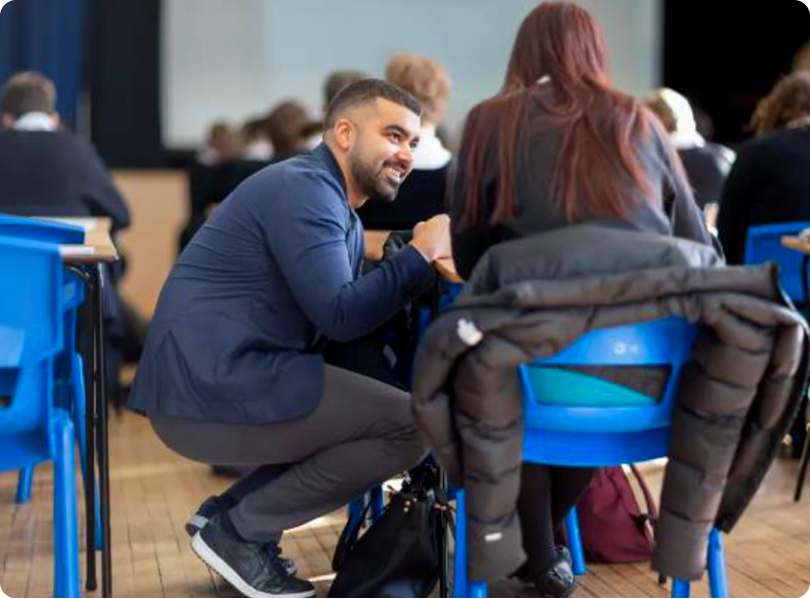
Every child is different.
A call with Performance Learning is an opportunity to discuss your child’s challenges, ask questions and explore whether our coaching approach is the right fit. There is no obligation, just an honest conversation about how your child learns and what support may help them thrive.
If we believe we can help, we’ll explain exactly how. If we don’t, we’ll tell you that too.
Our goal is simple. To give you clarity, confidence and a practical plan to help your child move forward.
Book your call today and take the first step towards helping your child unlock their full potential.
Fill in the form below and we'll get back to you as soon as possible.
Dr Tej's live and online events are launching soon, with practical sessions to help children revise smarter, build confidence and feel calmer about school and exams.
Get early access and tell us where you are, so we can let you know when events are coming near you.