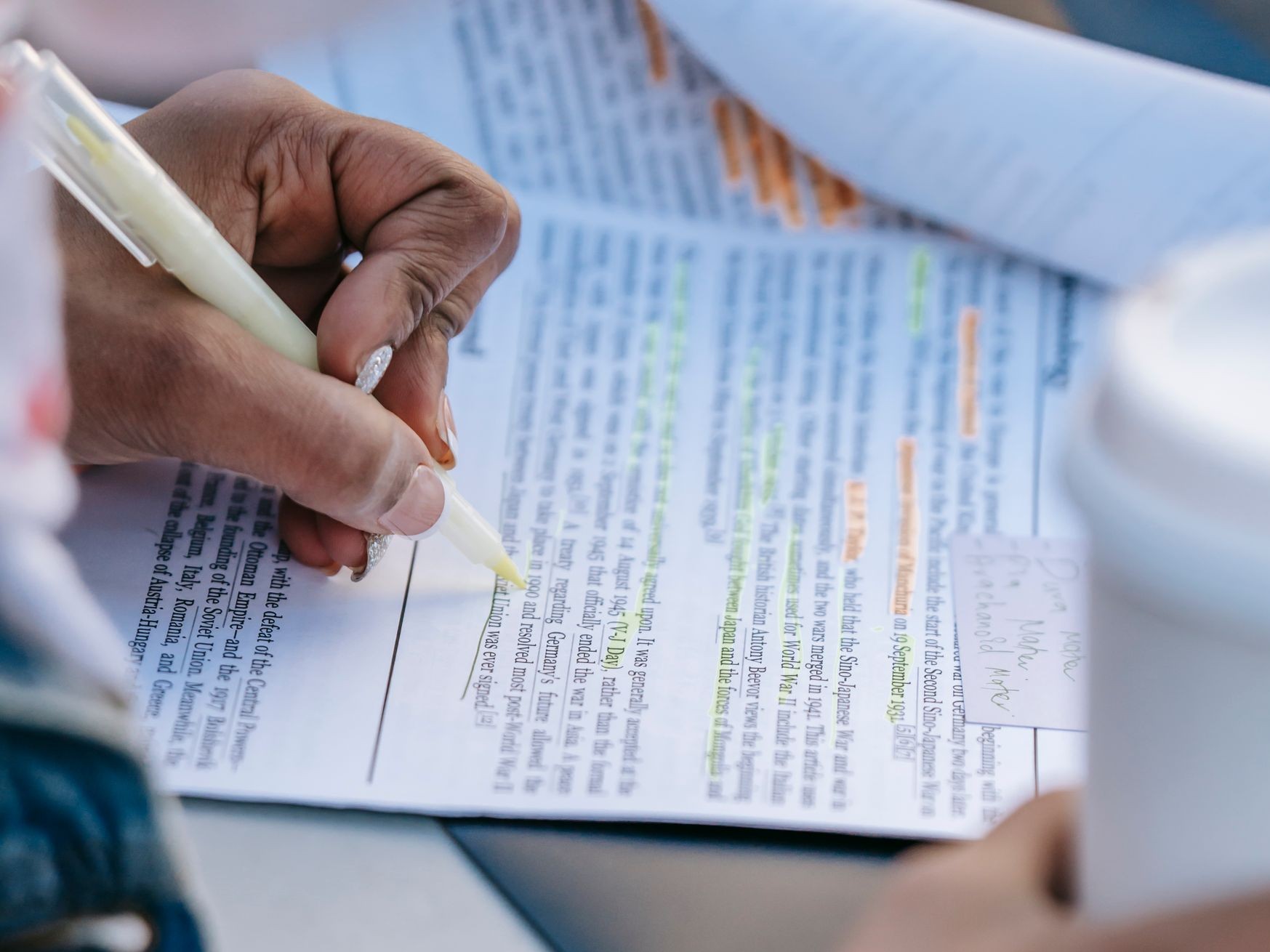
Has your child ever come home from school saying, “I’ve revised for hours, but none of it stayed in my head”?
If so, you’re not alone.
In fact, this is one of the most common conversations I have with parents:
Their child is working hard. They’re spending evenings at their desk, weekends buried in revision guides and holidays trying to catch up. From the outside it looks like they’re doing everything they should be doing. But when the test arrives, they freeze, forget what they knew the night before or struggle to apply their knowledge to unfamiliar questions.
The assumption is almost always the same.
“They need to revise more.”
But after years of helping children to transform their learning, take it from me: this is wrong.
Why study skills are about more than just “more revision”
I’m not saying revision doesn’t matter. It does, but more isn’t always the answer.
Here’s why: if a child doesn’t know how to learn effectively, asking them to spend another two hours revising isn’t going to help.
For years, we’ve talked about study skills and exam techniques as though they are separate ideas. I don’t believe they are. Beneath them sits something much more fundamental, a set of learning skills that underpin every lesson, every homework task and every exam a child will ever sit.
And the encouraging news is that these study skills are not reserved for naturally academic children.
They can be taught.
Not only that – I believe every child should be explicitly taught them, because they don’t just improve exam performance. They change the way young people think about learning itself.
I call them The Seven Learning Skills.
They are:
Organise. Structure. Retain. Recall. Understand. Apply. Analyse.
At first glance, they look deceptively simple.
In reality, they explain why one child can spend an hour revising and remember almost everything, while another spends three hours studying only to forget most of it by the following week.
Let’s explore them in more detail.
How to help your child to study better? Use the Seven Learning Skills
When I began analysing thousands of learners, I realised that regardless of the subject, almost every learning difficulty could be traced back to one or more of these fundamental skills. Once these improve, children don’t just get better at one subject, they become better learners across the board.
1. Organise
Learning begins with organisation.
Before a child can remember anything, they need to identify what actually matters. This sounds obvious, yet it’s something many children are never shown how to do.
Open a typical exercise book and you’ll often find pages of notes, diagrams, examples, corrections, highlighted text and annotations. To an experienced learner, it’s relatively easy to distinguish the key ideas from the supporting detail. To many children, it all looks equally important.
So they try to remember everything.
And it’s no surprise that they become overwhelmed.
One of the biggest breakthroughs I see in coaching isn’t when a child learns more content. It’s when they realise they don’t need to learn everything. They need to learn the right things first.
2. Structure
Once information has been organised, it needs to be structured.
Our brains don’t remember isolated facts particularly well. They remember relationships.
Think about trying to memorise fifty random words versus understanding the plot of your favourite film. The film is easier to remember because every scene connects to the next. It has a structure.
Learning works in much the same way.
Children who build connections between ideas remember more because they’re creating a network of knowledge rather than a collection of disconnected facts. That’s why techniques such as grouping, sequencing, mind mapping and breaking information into meaningful chunks can be so effective. They help the brain see order where previously there was only information.
This is also where I often see children begin to enjoy learning again. As knowledge becomes organised and connected, subjects stop feeling like endless lists of facts and start making sense.
3. Retain
If organisation and structure prepare learning, retention secures it.
Retention is the ability to move information from short term awareness into long term memory. Unfortunately, this is where many revision habits begin to fall apart.
Rereading notes, highlighting textbooks and watching revision videos can create a comforting feeling of familiarity. Children often finish a revision session believing they know the topic because it all looks recognisable.
But recognition isn’t the same as memory.
I’ve worked with countless students who felt confident on Sunday evening because everything in their revision guide seemed familiar, only to discover on Tuesday morning they could recall very little without looking.
Retention requires the brain to work. It requires children to revisit information over time, retrieve it regularly and strengthen the memory until it becomes durable.
Learning shouldn’t always feel easy.
In fact, some of the most effective learning often feels surprisingly effortful. That’s because the brain is actively building stronger pathways rather than simply becoming familiar with the page in front of it.
4. Recall
If retention is about storing information, recall is about being able to retrieve it when it matters.
This is where so many children come unstuck.
A parent will often tell me, “They knew it at home.” Their child will insist they understood everything the night before, yet when they sat down in the exam hall their mind went blank.
The assumption is usually that nerves got the better of them.
Sometimes they do.
More often, the information was never truly available to retrieve in the first place.
Imagine storing thousands of books in a library with no catalogue. Every book is there somewhere, but finding the one you need at the exact moment you need it becomes almost impossible.
That’s what learning can feel like for many children.
Knowledge has been taken in, but it hasn’t been practised in a way that makes it easily retrievable.
This is why I encourage parents to stop asking, “Have you finished revising?” and start asking, “Can you tell me what you’ve just learned without looking at your notes?”
It’s a simple shift, but it changes everything.
5. Understand
Children can often remember far more than they actually understand.
I see this all the time.
A student memorises a scientific definition perfectly but can’t explain what it actually means. Another can recite a historical event word for word but struggles to explain why it happened or why it mattered.
That’s because understanding goes beyond memory.
It’s about making meaning.
Can your child explain an idea in their own words? Can they connect it to something they’ve already learned? Can they answer the question, “Why?” rather than simply remembering “What?“
When understanding is missing, learning becomes fragile.
The slightest change in wording can leave a child feeling completely lost because they weren’t relying on understanding. They were relying on memory alone.
This is why I often encourage children to imagine they’re teaching somebody else. If you can explain a concept clearly, using your own words and examples, it’s usually a good indication that you’ve genuinely understood it.
6. Apply
Application is the ability to transfer what you know into unfamiliar situations. It’s recognising that although the question looks different, the underlying principle is exactly the same.
School isn’t designed to reward children for simply remembering information.
It rewards them for using it.
This is one of the biggest shocks many pupils experience when they move into secondary school or begin preparing for GCSEs. They revise thoroughly, feel confident about the content and then open the exam paper to discover questions they’ve never seen before.
Their immediate reaction is often, “We didn’t learn this.”
In reality, they usually did.
The knowledge is there.
The challenge is applying it in a new context.
This is why practising questions, exploring different scenarios and asking, “Where else could this idea be useful?” are such valuable habits. They encourage children to think flexibly rather than rigidly.
Knowledge becomes something they can use, not simply something they can remember.
7. Analyse
The final skill is analysis, and it’s often the one that separates good performance from exceptional performance.
Analysis is about thinking beyond the obvious. It’s comparing, evaluating, questioning, interpreting and drawing conclusions. It’s the difference between describing what happened and explaining why it happened. Between identifying an answer and justifying it.
Many children assume analysis is reserved for the highest attaining students.
I don’t believe that’s true.
Analysis is simply another skill.
Like every skill before it, it can be developed through practice, feedback and thoughtful questioning.
One of my favourite questions to ask a student isn’t, “What’s the answer?”
It’s, “How did you arrive at that answer?”
That one question reveals far more than whether they were right or wrong.
It tells me how they’re thinking.
Because that’s what these seven skills are really about.
They aren’t teaching children what to think.
They’re teaching them how to think.
And once a child understands that learning follows a process rather than relying on natural talent, something remarkable begins to happen. They stop seeing success as something that belongs to other people and begin to realise it’s built, one skill at a time.
Developing study skills: where do you start?
Reading these can feel like a lot, particularly if your child is already feeling overwhelmed.
The good news is that you don’t need to transform everything overnight.
In fact, I’d encourage you not to.
The biggest improvements I’ve seen have rarely come from making huge changes all at once. They’ve come from helping a child master one skill at a time, allowing each success to build confidence for the next.
Perhaps this week you focus on organisation by helping them identify the three most important ideas from a lesson.
Next week, you help them strengthen recall by closing their books and explaining what they’ve learned in their own words.
A week later, you explore application by asking where else they might use that knowledge.
Small, consistent improvements are far more powerful than occasional bursts of intensive revision.
Learning is much like building a house. You don’t start with the roof. You begin with solid foundations and build carefully, one layer at a time.
That’s exactly what these seven skills provide.
They aren’t seven isolated techniques.
They’re seven building blocks that support every lesson, every homework task and every exam your child will ever face.
The stronger those foundations become, the easier learning starts to feel.
Building study skills: a final thought
If there’s one message I’d like you to take away from this article, it’s this:
Your child’s future isn’t determined by how much they currently know.
It’s determined by how well they know how to learn.
Knowledge will always change. New subjects will appear, careers will evolve and technologies we can’t yet imagine will reshape the world your child grows up in.
The ability to learn, however, will remain one of the most valuable skills they will ever possess.
That’s why I believe we should spend less time asking children to simply work harder and more time helping them become better learners.
Because when a child learns how to organise, structure, retain, recall, understand, apply and analyse information, something remarkable happens –
- Exams become less intimidating
- Learning becomes more enjoyable
- Confidence begins to grow
Most importantly, they stop measuring themselves by the results on a piece of paper and start recognising something far more important.
They are capable.
Sometimes, they just needed someone to show them how to learn.
If you’d like to understand which of these seven learning skills your child finds most challenging, or you’re looking for practical ways to help them build stronger learning habits at home, here’s what to do:
- Explore the resources on this website
- Book a FORESIGHT Assessment to identify the learning behaviours and skills that are holding your child back and provide a clear, personalised starting point for helping them unlock their potential